Counseling and Wellness
Frederick Community College’s Counseling and Wellness Services helps you manage personal problems which may impact your day-to-day life. We provide short-term, solution-focused counseling to current students, as well as crisis intervention for students who are suicidal, involved in unsafe relationships, or experiencing other emergencies. Our staff is well versed in campus and community resources to help you find the right support and can also provide referrals to additional mental health services. Personal counseling can empower students to address their emotional, psychological, social, and behavioral well-being to improve academic performance and create a more balanced life. Counseling services are available by walk in or appointment. All services are free and confidential for current FCC students.
If you are experiencing a life-threatening mental health emergency, call 911.
Crisis Services
The National Alliance on Mental Illness (NAMI) defines a mental health crisis as any situation in which a person’s behavior puts them at risk of harming themselves or others, or prevents them from caring for themselves or functioning effectively in the community.
Contact a counselor immediately for crisis support if you cannot wait to speak with someone or if any of the following apply:
- You feel too distressed to keep yourself or others safe.
- You have a current plan to attempt suicide or harm someone else.
- Someone close to you has recently died.
- You witnessed a traumatic event in the past few days.
- You were recently physically or sexually assaulted.
- You hear voices or see things others do not.
- Your mental health symptoms are preventing you from attending classes.
Counselors are available by appointment and for walk-in services Monday–Friday, 8:30 a.m.–4:30 p.m.
After-Hours Crisis Support
988 Suicide & Crisis Lifeline
Call or text 988, or chat at 988lifeline.org. Available 24/7, the Lifeline provides free, confidential support for people in distress;
suicide prevention and crisis resources; and help for people concerned about someone
else or seeking emotional support.
The Mental Health Association of Frederick County
The Mental Health Association of Frederick County offers 24/7 walk-in behavioral health services for mental, emotional, and family
relationship crises.
Location: 340 Montevue Lane, Frederick, MD 21702
Phone: 301.663.0011
Grief is a natural response to loss. At some point in life we all experience the emotional
suffering when something or someone we love is taken away. This pain from loss can
feel overwhelming. Our emotions can be difficult or unexpected and can include shock,
anger, disbelief, guilt, and deep sadness. Sometimes your physical health can be disrupted
making it difficult to sleep, eat, or even think clearly. These reactions are normal
when dealing with loss—and the greater the loss, the more intense these feelings can
be.
Coping with loss is one of life’s biggest challenges. Most associate grieving with
the death of a loved one-but any loss can cause grief, including:
- Divorce or relationship breakup
- Loss of health
- Losing a job
- Loss of financial stability
- A miscarriage
- Retirement
- Death of a pet
- Loss of a cherished dream
- A loved one's serious illness
- Loss of a friendship
- Loss of safety after a trauma
- Selling the family home
Many of the signs and symptoms of grief are similar during the first few months. Support
through the grieving process can be very beneficial. This can be in the form of one-on-one
counseling, but some find support groups with others who are grieving to be particularly
comforting and strengthening. Grief symptoms normally start to fade gradually over
time. However, grief can become complicated when symptoms continue unchanged or get
worse. It is important to reach out for support if this happens.
Signs and Symptoms of Complicated Grief
How to Support Someone Grieving
Local Resources
Frederick Hospital Grief Supports
Support services include:
- Short-Term Individual Counseling
- Support and self-help groups
- Workshops on grieving
- On-site grief support in the workplace
- Camp Jamie, a camp for grieving children grades 1-12
- Grief support in schools
- Community grief education
- 13-month individual support to hospice families following the death of their loved one
- Annual Remembrance Service
For more information about grief support available through Frederick Health Hospice
call 240-566-3030.
Other Resources for Grief
- Umbrella Project: Hiking journeys for grieving young adults
- Frederick Grief Support Group Meetings: In person
- Online Grief Support Groups
- Grief Articles, Courses, Creativity, Sharing, & Community
- Helpful Books on Grief: For children, teens and adults
Self-Assessment
Self-assessment can be a great first step to offer insight, support, and guidance about mental health challenges. These assessments are not meant to provide a diagnosis, but to guide and educate students about challenges they may be experiencing so they can access the best supports for their unique circumstances. Remember you are not alone and if you would like additional support, you are welcomed to schedule an appointment with a counselor to discuss your self-assessment results.
- Ulifeline
Ulifeline is an anonymous online resource for college mental health. Their online assessments can help determine whether you or someone you care about may be struggling with a treatable mental health condition. Ulifeline also offers education on a variety of common mental health conditions as well as how to help a friend who may be struggling. - Mental Health America
Mental Health America is another anonymous online resource that offers assessment for a variety of mental health challenges. - HelpGuide
Helpguide provides trustworthy guidance that can be used to strengthen your mental health and well-being, navigate challenges, and make healthy changes in your life. - Adverse Childhood Experiences (ACE) questionnaire
Trauma can impact the whole person including attachment, self-esteem, emotional regulation, behavior, world view, and even the way the brain works. The Adverse Childhood Experiences Study was completed in the mid 1990s by Kaiser Permanente and the CDC. They discovered that adverse childhood experiences are linked to physical, mental, and behavioral health conditions that ultimately can result in a shorter life.
Having four or more ACEs:
-
- Significantly increases your risk for seven out of 10 leading adult causes of death in the U.S.
- Doubles your risk of becoming a smoker
- Makes you 7x more likely to struggle with alcohol
- Increases the risk of attempted suicide by 1200%
Having six or more ACEs increases the risk of your lifespan being shortened by 20 years.
Curious what your ACE Score is? Take this assessment to find out.
Heartly House
24 Hour Hotline: 301.662.8800
Heartly House offers 24-Hour hotline/intervention, hospital accompaniment, emergency
shelter, counseling services, legal services, abuse intervention programs, human trafficking
prevention, community-based services, and resources for survivors of sexual assault
and domestic violence/intimate partner violence to Frederick County residents.
Rape, Abuse, Incest, National Network (RAINN)
24 Hour Hotline: 800.656.4673
Chat option available
RAINN is the nation's largest anti-sexual violence organization, offering the national
sexual assault hotline and carrying out programs to prevent sexual violence, help
survivors, and ensure that perpetrators are brought to justice.
Sexual Assault Legal Institute (SALI)
301.565.2277 or toll-free at 877.496.7254
Maryland Coalition Against Sexual Assault’s (MCASA) Sexual Assault Legal Institute
(SALI) provides pro bono legal services to survivors of sexual violence in Maryland.
SALI has Spanish-speaking advocates on staff and will provide language interpretation
services for other languages, including ASL.
Health officials consider substance use as crossing the line into substance misuse if that repeated use causes significant impairment, such as:
- Cravings for the substance
- Wanting to cut down but not being able to
- Failure to meet responsibilities like work and school
- Health issues
- Risky use like driving while impaired
- Social issues like problems in relationships
In other words, if someone drinks enough to get frequent hangovers; uses enough drugs
that they miss work or school; smokes enough marijuana that they have lost friends;
or often drinks or uses more than they intended, their substance use is probably considered
misuse or harmful.
Whether the substance involved is crack cocaine or alcohol or a behavior such as gambling,
the common denominator of all addictions is continued use despite the development
of negative consequences—whether to self, relationships, finances, school, or work
performance—and the inability to control use.
Substance misuse is separated into 10 classes of drugs: alcohol; caffeine; cannabis;
hallucinogens (e.g. phencyclidine, LSD); inhalants; opioids; sedatives, hypnotics,
or anxiolytics; stimulants (e.g. amphetamines, cocaine); tobacco
The first step in recovery is to seek help. There are different levels of treatment
made to help individuals with different needs. Services range from weekly outpatient
therapy which can be individual or in a a group, intensive outpatient therapy several
days a week, or residential inpatient treatment.
For more information:
What is addiction?
How to help someone who is addicted
SAMHSA’s National Mental Health and Substance Use Helpline: 1.800.662.HELP (4357)
Behavioral Health Services of Frederick County
Need help finding services?
Call 301.600.1755 or email BHS@FrederickCountyMD.gov
Behavioral Health Services is responsible for inpatient and outpatient community behavioral
health services, which include a comprehensive array of services and supports to help
individuals with substance-related disorders, mental health disorders, co-occurring
disorders, and problem-gambling disorders recover. They offer screening, evaluation,
recovery services, prevention programs, and youth support services.
Useful links:
Adult Recovery Services
State of Maryland Behavioral Health Department
Alcohol Misuse Prevention
Opioid Misuse Prevention
Tobacco Prevention and Cessation Program
Street Safe Program (sterile syringes, safe disposal, Narcan, wound care, RAD)
24/7 Drug Drop Box
Community Resource Directory
Title IX Resources
Frederick County Hotline
Frederick County Mental Health Services
Mental Health Association of Frederick
Western Maryland 2-1-1
FCC Alcohol, Tobacco, Opioid & Other Drug Policy
Maryland Addiction Recovery Center
Phone: 866.925.5116
Fax: 410.773.0501
Email: info@marylandaddictionrecovery.com
Maryland Addiction Recovery Center’s purpose is to, directly and indirectly, help
individuals, families, and communities suffering from addiction in whatever way necessary
to support sustainable, long-term recovery and allow patients the opportunity to achieve
a purpose-driven, high quality of life.
Intensive Outpatient Program or call 866.399.4681
Family Recovery Program or call 866.929.2159
Peer-Led Wellness and Recovery Center
On Our Own offers a wide range of support and services, including peer support, daily
groups (online and in-person), advocacy, health education, CPRS training, community
resources navigation, life skills coaching, and more for those who struggle with mental
health challenges and/or substance use disorder in Frederick County and beyond.
Email: onourownfrederick@gmail.com or call 240.629.8015
Ideal Option has over 90 clinics in 11 states and is one of the nation’s largest outpatient providers
of evidence-based medication-assisted treatment for addiction to opioids, alcohol,
methamphetamine, and other substances. Ideal Option’s mission is to provide underserved
populations with low-barrier access to evidence-based addiction treatment.
The Orenada Center of Wellness has residential and outpatient substance use disorder and mental health treatment
for men women and adolescents. They are dedicated to providing the highest level of
care (including co-occurring diagnosis) through all stages of recovery. Services include
four-week residential treatment, twelve-week intensive outpatient, weekly outpatient
treatment and medication assisted treatment.
Outreach Recovery has an alcohol, drug and medical detox program as well as addiction rehabilitation
for alcohol, heroin, meth, opioids, benzodiazepines, cocaine and fentanyl.
Serenity Treatment Center offers a small, client centered, high-quality clinical program that creates an environment
ideal for beginning the unique journey to recovery. Located in Frederick and Hagerstown.
Call at 301.898.2627.
The Crossroads Center of Frederick offers individual, family and group outpatient therapy. They provide a holistic
treatment approach that supports you mentally, physically, and emotionally and is
customized to your needs.
Suicide and Crisis Lifeline
Call: 988
Text: 988
Chat: 988lifeline.org
The Trevor Project
866.488.7386 - 24 hour suicide hotline for gay or questioning youth.
The American Foundation for Suicide Prevention Maryland Chapter
Everybody has the right to be safe in relationships. The National Domestic Violence
Hotline defines domestic violence, also called intimate partner violence, as “a pattern
of behaviors used by one partner to maintain power and control over another partner
in an intimate relationship.” This includes physical abuse, emotional and verbal abuse,
sexual abuse, financial abuse, digital abuse, and stalking.
If you are experiencing domestic violence/ intimate partner violence, please contact
a counselor or a community resource for additional support and safety planning.
Local and National Resources
Heartly House
24 Hour Hotline: 301.662.8800
Heartly House offers 24-Hour hotline/intervention, hospital accompaniment, emergency
shelter, counseling services, legal services, abuse intervention programs, human trafficking
prevention, community-based services, and resources for survivors of sexual assault
and domestic violence/intimate partner violence to Frederick County residents.
National Domestic Violence Hotline
1.800.799.7233
Text “Start” to 88788
Online Chat
Other hotlines:
If you or someone you know needs help, please contact a hotline for additional support
and resources.
- Maryland Network Against Domestic Violence: 1.800.MD.HELPS or 301.429.3601
- National Sexual Assault Hotline: 1.800.656.HOPE (4673), available 24 hours a day
- National Teen Dating Abuse Helpline: 1.866.331.9474; 1.866.331.8453 (TTY)
- National Victims of Crime Hotline: 1.855.4.VICTIM (855.484.2846)
- Rape, Abuse, Incest National Network (RAINN): 800.656.4673
- Stalking Resources Center: 202.467.8700
Calming Resources
Strengthening resilience-building skills assists with managing stress.
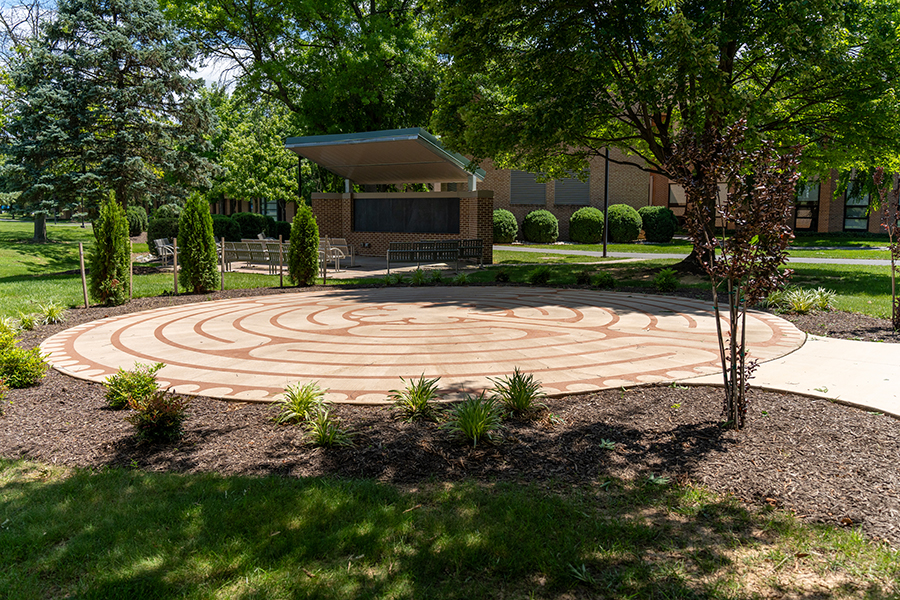
Visit the FCC labyrinth which is a winding path that leads to a center and back out
again. Unlike a maze, it has no wrong turns or dead ends. Walking a labyrinth slowly
can be a form of moving meditation, inviting individuals to focus on their breathing,
movement, and the present moment. This quiet, reflective practice may help ease stress,
calm anxious thoughts, and create space for relaxation and personal reflection.
Developing resilience is one of the best ways to minimize the impact that stress.
This online resource provides a variety of free tools for mindfulness including guided
mediation, yoga, guided imagery, and virtual calming rooms to help build resiliency
and manage stress.
Counseling Staff

Kathryn Manwiller,
M.S.W., LCSW-C
Pronouns: She/Her/Hers
Counselor
Student Center, H 103-B
301.624.2757
Kmanwiller@frederick.edu
Schedule Appointment

Emily Gebhart,
MSW, LCSW-C
Pronouns: She/Her/Hers
Counselor
Student Center, H 103-A
301.624.2785
Egebhart@frederick.edu

Diego "Diggy"
Position: Facility Dog
Student Center, H 103-A
Helpful Information
Counseling & Wellness
Location: Student Center, H-103
Email: counseling@frederick.edu
Hours: Mon. - Fri. 8:30 a.m. to 4:30 p.m.
After-Hours Crisis Support: Call or text 988
Scope of Service
Campus Police & Public Safety
Phone (non-emergency): 301.846.2453
Phone (emergency): Dial x4444 from any campus phone
More Information:
Campus Police and Public Safety.
Title IX Overview
FCC students have the right to learn and work in an environment free from sexual misconduct,
discrimination, and harassment
More Information:
Title IX webpage.
Confidentiality Statement
In adherence with state laws and the NASW Code of Ethics, all therapeutic sessions between students and a counselor are considered confidential and are protected as such. Confidentiality means that information shared within the counseling relationship will not be shared outside that relationship. This includes any aspect related to appointments and records. Clinical records are maintained separately from educational records and cannot be accessed by anyone other than Counseling Center’s professional staff without your written permission or a court order.
Under Maryland Law, there are a few exceptions to confidentiality established to protect the client or the public. These exceptions include:
- You are considered at imminent risk for harming yourself
- You are considered at imminent risk for harming others
- Previous or current child abuse
- Abuse of elderly persons or persons with disabilities
- A court order